

SEO
How to Use AI for Content Marketing Without Losing Your Voice
Contents
Master how to use AI for content marketing the right way: tools, tactics, and tone that match your brand.
AI is changing the way we create—fast. From blog generation to content optimization, artificial intelligence is now a powerful ally in every marketer’s toolkit. But here’s the dilemma: how to use AI for content marketing without losing the authentic voice that sets your brand apart? In this guide, we’ll break down how to strike that balance. You’ll learn how to integrate AI tools to boost productivity, generate ideas, and streamline workflows, without sounding robotic. If you’re looking to scale content without sacrificing tone, clarity, or connection, this article will show you how to stay human while going high-tech.
Why AI Is Reshaping Content Marketing
Content marketing has always required a balance of creativity, strategy, and execution—but now, speed and data are taking the lead. AI is transforming the way teams plan, produce, and optimize content by introducing unprecedented levels of efficiency, scalability, and personalization.
AI tools can analyze user behavior, predict trends, and generate first-draft content in seconds. For marketers, this means delivering more content, faster—without bloating budgets or headcount. It also enables consistency across channels, tighter audience targeting, and the ability to test and refine campaigns with real-time data.
So, how will AI affect the marketing industry moving forward? It’s already reducing friction across the content lifecycle—from ideation to optimization. But that doesn’t mean humans are out of the equation. The brands winning today are those that pair AI’s speed with a human voice that builds trust.
For more perspective on where this trend is headed, see our take on whether digital marketing can be replaced by AI.
Top AI Tools for Content Marketers
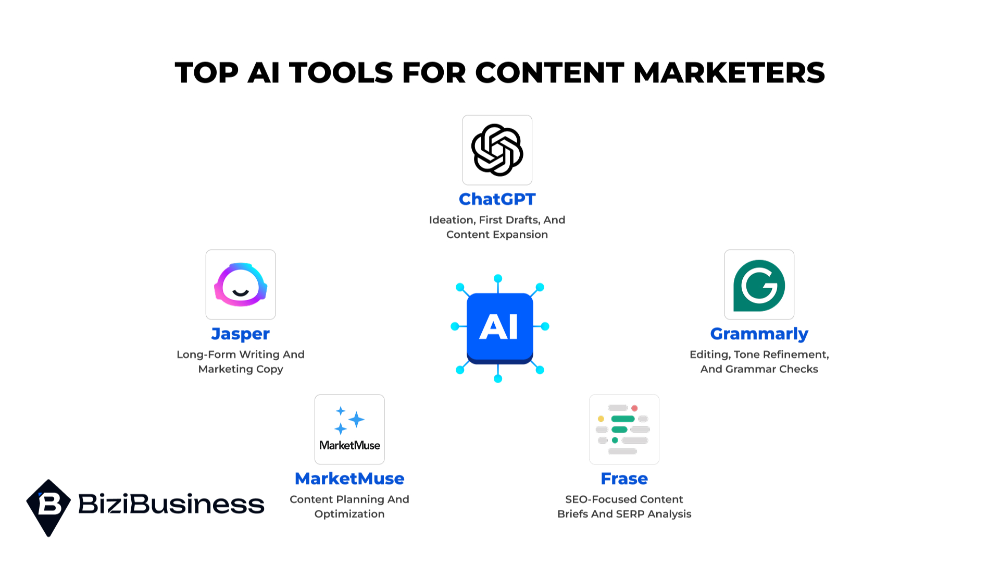
With so many platforms available, choosing the right AI tools for content marketing can feel overwhelming. The good news? Most tools fall into clear categories—each designed to solve specific parts of your workflow. From idea generation to SEO optimization, here are some of the top picks content teams rely on:
1. ChatGPT
Best for: Ideation, first drafts, and content expansion
ChatGPT helps marketers brainstorm topic ideas, draft blog intros, repurpose existing content, and even simulate customer questions. It’s a versatile tool for getting unstuck or scaling first-draft output without starting from scratch.
2. Jasper
Best for: Long-form writing and marketing copy
Jasper offers customizable tone-of-voice settings, pre-built templates, and team collaboration features. Ideal for marketers creating blog posts, email sequences, and product descriptions at scale.
3. Grammarly
Best for: Editing, tone refinement, and grammar checks
Grammarly goes beyond typo detection. It evaluates tone, clarity, and readability—making it perfect for maintaining brand consistency and polishing AI-generated drafts.
4. MarketMuse
Best for: Content planning and optimization
MarketMuse uses AI to analyze search intent, competitor gaps, and topical relevance. It helps marketers build comprehensive outlines and optimize existing content to improve rankings.
5. Frase
Best for: SEO-focused content briefs and SERP analysis
Frase accelerates the research process with real-time SERP data, helping marketers generate briefs, answer questions, and ensure content meets SEO best practices.
Each of these AI tools for content marketing brings unique strengths, depending on your needs. The key is to choose a stack that complements your workflow, not replaces your voice.
Want to take this further? Check out our guide on how to use AI for SEO to see how these tools support long-term visibility.
Maintaining Your Brand Voice with AI
Your brand voice is the personality behind your words—the tone, phrasing, and rhythm that makes your content recognizably you. In the age of automation, preserving that voice is critical. Otherwise, you risk sounding like everyone else.
The debate around human vs AI content often centers on authenticity. AI can generate fast, factual text—but without guidance, it can default to generic, robotic phrasing. That’s why training your tools is just as important as using them.
How to Train AI to Match Your Voice
You don’t need to be a developer to shape your AI output. Use these techniques:
- Style guides: Share your brand’s tone rules, preferred phrasing, and formatting examples
- Tone descriptions: Add context like “professional but conversational” or “friendly and authoritative”
- Prompt engineering: Start with detailed instructions like, “Write a 200-word intro in a warm, approachable tone. Avoid corporate jargon.”
Example Prompt:
“Write a blog intro on dental implants. Keep the tone educational yet empathetic—like a trusted advisor. Use contractions. Avoid technical terms unless explained clearly.”
This keeps content rooted in your brand personality, not just a string of optimized keywords.
Common Pitfalls to Avoid
- Overuse of filler or clichéd transitions
- Passive voice that makes copy feel lifeless
- Inconsistent tone across different writers or AI tools
To maintain your voice long-term, build a system that includes both content governance and editorial review. This is especially important when creating high-value assets like blogs, landing pages, or cornerstone content that define your brand’s expertise.
How to Use Generative AI in Content Creation
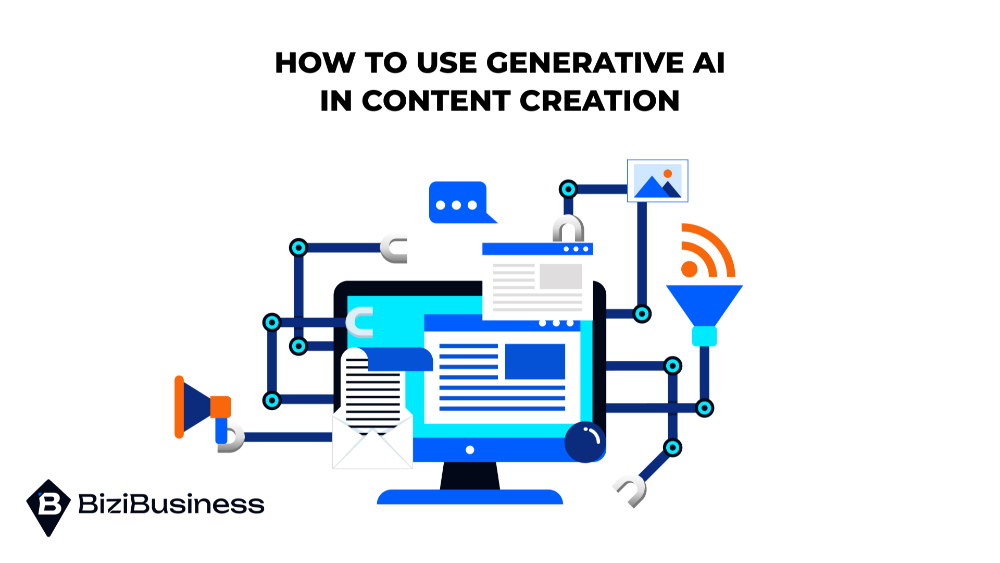
Generative AI refers to artificial intelligence that can produce original text, images, or other media based on prompts. In content marketing, it’s become a powerful tool for speeding up creation while keeping teams focused on strategy. But knowing how to use generative AI in marketing—and when not to—is what separates good content from forgettable automation.
When to Use Generative AI
Used thoughtfully, AI can support your team by:
- Building outlines and organizing thoughts faster during the planning phase
- Repurposing content from blogs to emails, social captions, or video scripts
- Personalizing messages at scale, especially in email or product recommendations
- Generating draft copy that writers can refine to match your brand tone
If you’re wondering how to use generative AI for marketing that performs without sounding robotic, the answer lies in using AI to support—not replace—creative input.
When NOT to Use Generative AI
There are clear limits to what AI should handle. Avoid relying on it for:
- Sensitive or legal content where compliance and accuracy are critical
- Crisis communication or emotionally nuanced messaging
- High-stakes branding like vision statements, keynote scripts, or core value messaging
In these scenarios, human insight is irreplaceable.
And don’t forget: not all AI-generated content is created equal. For a closer look at the risks and rewards, explore our deep dive into auto-generated content and how to keep it aligned with SEO best practices.
Common Mistakes to Avoid
While AI can dramatically improve content efficiency, it’s easy to fall into bad habits that hurt your brand more than help it. To get the most out of your tools—and maintain trust with your audience—avoid these common missteps.
1. Over-Reliance on AI Without Fact-Checking
AI can generate convincing content fast, but it doesn’t always get the facts right. Whether you’re discussing medical stats, product specs, or market trends, always verify claims against credible sources. Publishing unchecked AI content can damage your authority and mislead readers.
2. Skipping Human Review
Even the best AI output can lack nuance, misinterpret tone, or miss your brand’s voice. Skipping human editing leads to robotic phrasing, awkward transitions, and surface-level thinking. A strong editorial layer ensures your content feels polished, consistent, and on-brand.
3. Treating AI Like a Content Factory
Using AI to crank out hundreds of blog posts with little thought or purpose may seem efficient—but it dilutes quality. Content still needs to be strategic. It should serve a specific audience, answer real questions, and align with your broader marketing goals. AI is a tool, not a strategy.
4. Ignoring Ethical Risks
AI-generated content raises real concerns around:
- Plagiarism: AI may unintentionally echo copyrighted language
- Bias: Some models reflect outdated or biased viewpoints if prompts aren’t carefully constructed
- Misinformation: Without proper oversight, content can spread false or misleading claims
Treat AI-generated content the same way you would any published asset—with accountability, transparency, and care.
Striking the Balance Between AI and Authenticity
AI is revolutionizing content marketing—but speed means nothing without trust. Tools like ChatGPT and MarketMuse can help you create faster and smarter, but your brand voice, tone, and strategic intent still need a human touch. That’s what sets great content apart.
Start by auditing your current workflow. Test one or two AI tools that align with your needs. And most importantly, document your brand voice so any AI output stays consistent with who you are.
Looking to blend scale with authenticity? Explore our human and AI-powered solutions at BiziBusiness or connect with BiziSEO to build content systems that perform and resonate.

Subscribe for the week's best marketing content
SEO
Discover the latest SEO tips, techniques,
and trends to boost your website’s ranking and drive organic traffic.
Is more content better for SEO? Learn what Google really values and why content quality, structure, and freshness matter more than volume.
What is pillar content in SEO? Learn how to structure your site using pillar pages...
Learn how is AI Overview affecting SEO for blogging in 2025. Understand the risks, ranking...
Wondering is AI-generated content good for SEO? Discover how AI content impacts your rankings, Google’s...
Write smarter, not harder. Learn how to create SEO content with ChatGPT and boost your...


