

SEO
Should I Use Email Marketing for My Small Business? What Every Owner Needs to Know

Contents
Should I use email marketing for my small business? Discover the key benefits, tips, and tools every owner needs to make the right decision.
Should I use email marketing for my small business? It’s a common question among entrepreneurs looking for cost-effective ways to reach customers and grow revenue. The answer is a resounding yes. Email marketing remains one of the most powerful tools available to small businesses, offering a direct line to your audience and a high return on investment—averaging $36 to $42 for every $1 spent. Whether you’re nurturing leads, promoting products, or building brand loyalty, email marketing provides measurable results and scalable growth potential. This guide explores why it’s a smart strategy and how to get started effectively.
Understanding Email Marketing
To decide if email marketing is right for your business, it’s important to first understand what it is, how it works, and how email marketing helps businesses connect with their audience and drive results.
Definition and Purpose
Email marketing is a digital strategy that involves sending targeted emails to prospects and customers to promote products or services, build relationships, and drive conversions. For small business owners wondering how to do email marketing or how to start email marketing, it all begins with understanding its core function: delivering value directly to your audience’s inbox in a cost-effective, measurable way.
Types of Email Campaigns
There are several types of email campaigns, each serving a unique purpose in your business strategy:
- Newsletters – Share updates, news, and educational content to stay top-of-mind.
- Promotional Offers – Highlight sales, discounts, or limited-time deals to drive quick action.
- Transactional Emails – Order confirmations, shipping updates, and receipts that support customer experience.
- Personalized Messages – Tailored emails based on user behavior or preferences to increase engagement.
Understanding how email marketing helps business is key: it nurtures customer relationships, increases brand loyalty, and boosts revenue, making it a vital tool for long-term growth. Ultimately, how does email marketing help businesses? By turning audience interest into sustained engagement and measurable results.
Benefits of Email Marketing for Small Businesses

For small business owners wondering how email marketing helps business, the benefits are both substantial and measurable. This cost-effective strategy empowers you to connect directly with your audience, build loyalty, and drive consistent growth, all with tools that are accessible and easy to manage.
Cost-Effectiveness
Compared to traditional marketing channels like print or paid ads, email marketing is incredibly budget-friendly. Most platforms offer flexible pricing, and studies show an average ROI of $36–$42 for every $1 spent, making it one of the highest-performing digital marketing tactics.
Direct and Personalized Communication
Email marketing allows you to send targeted, personalized messages based on customer behavior, preferences, or purchase history. This direct line to your audience builds trust and fosters stronger relationships over time, enhancing brand loyalty and relevance.
Increased Customer Engagement and Retention
Consistent, value-driven emails keep your business top-of-mind. Whether through educational newsletters, special offers, or seasonal updates, email nurtures engagement and encourages repeat business, a key factor in long-term success.
Measurable Results
With email marketing, every campaign is trackable. You can monitor open rates, click-through rates, conversions, and more, giving you the data needed to refine your strategy and maximize performance. This visibility helps demonstrate how email marketing helps businesses grow in real time.
Scalability and Automation
As your business grows, your email strategy can scale with it. Modern platforms offer automation tools that let you create drip campaigns, triggered responses, and segmented outreach, saving you time while maintaining a personal touch.
Comparing Email Marketing to Other Channels
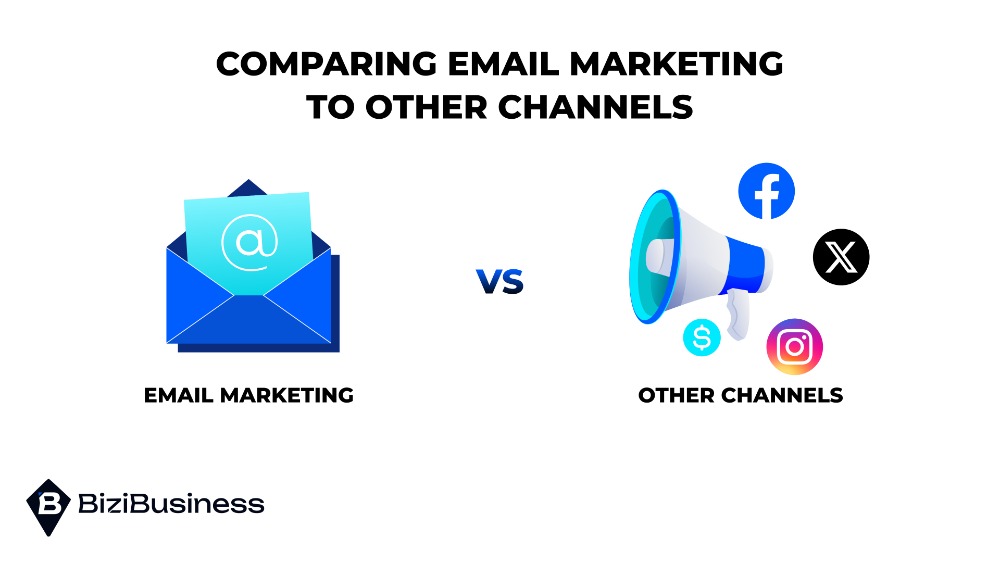
To fully appreciate the value of email marketing, it’s helpful to compare it with other popular marketing channels. Whether you’re weighing how to do email marketing against social media or paid ads, the data makes a compelling case for email’s effectiveness, especially for small businesses looking to maximize ROI.
Email vs. Social Media
While social media is great for visibility and engagement, email marketing excels at customer acquisition and conversion. In fact, studies show that email marketing is up to 40 times more effective than social media for acquiring new customers. Unlike social platforms, where algorithms control reach, email gives you direct access to your audience’s inbox, allowing for more personal, uninterrupted communication.
Email vs. Paid Advertising
Paid advertising can deliver quick visibility, but it often comes with high costs and limited targeting without a large budget. In contrast, email marketing is low-cost and high-impact, offering a much higher return on investment over time. With email, you’re nurturing leads and building long-term relationships, rather than paying for each impression or click.
Getting Started with Email Marketing

Now that you understand the value of email marketing, it’s time to take the first steps. Whether you’re learning how to start email marketing or looking to fine-tune your strategy, these foundational steps will set you up for success.
Building an Email List
Your email list is your most valuable asset. To build it organically:
- Offer incentives like discounts, lead magnets, or exclusive content.
- Add sign-up forms to your homepage, blog, and checkout pages.
- Promote your list on social media to attract followers already interested in your brand.
If you’re asking how to get email list for email marketing, focus on permission-based tactics to ensure long-term engagement and deliverability.
Choosing an Email Marketing Platform
Select a user-friendly platform that meets your needs. Popular options include:
- Mailchimp – Great for beginners with automation and design tools.
- Constant Contact – Known for ease of use and strong customer support.
- Brevo (formerly Sendinblue) – Offers multi-channel marketing with built-in CRM features.
These platforms help streamline the process of how to do email marketing at any scale.
Creating Effective Campaigns
Successful emails combine great design with persuasive content. Focus on:
- Crafting attention-grabbing subject lines
- Providing clear, value-driven content
- Including a strong call-to-action (CTA) that directs readers to take the next step
Consistency in tone and value keeps your audience engaged.
Segmenting Your Audience
Not every subscriber is the same. Segment your list based on demographics, behavior, or purchase history to send more relevant, personalized messages. Segmentation improves open and click-through rates and shows your audience you understand their needs.
Analyzing and Optimizing
Track key metrics like open rate, click-through rate, and conversions. Use A/B testing to compare subject lines or CTA buttons. These insights help you refine your approach, improve performance, and fully realize how email marketing helps business growth over time.
Addressing Common Concerns

While email marketing offers strong benefits, small business owners often hesitate due to perceived challenges. Let’s address some of the most common concerns and how to overcome them effectively.
Time Constraints
Managing a business is time-consuming, and adding email marketing can feel overwhelming. Fortunately, modern platforms offer automation tools that handle welcome sequences, follow-ups, and promotional campaigns on autopilot. With a few hours of initial setup, you can run consistent email marketing with minimal ongoing effort—freeing you to focus on other areas of your business.
Content Creation Challenges
Struggling with what to write? You’re not alone. To ease the burden:
- Use pre-built templates offered by email platforms for newsletters, announcements, and promotions.
- Repurpose existing content from your website, blog, or social media into email-friendly formats.
- Focus on short, value-driven messages that inform, engage, or prompt action.
Even simple updates can keep your brand top-of-mind.
Compliance and Regulations
Email marketing must follow legal requirements to protect both you and your subscribers. Two key regulations include:
- GDPR (General Data Protection Regulation) – Requires clear consent and transparency for users in the EU.
- CAN-SPAM Act – Applies in the U.S. and mandates the inclusion of an unsubscribe link and accurate sender information.
Make sure you obtain permission before emailing and honor opt-out requests promptly. Most email marketing platforms include built-in tools to help you stay compliant.
Why Email Marketing Is a Smart Move for Small Businesses
Email marketing remains one of the most effective, affordable, and scalable tools available to small businesses. From its high return on investment to its ability to build personalized, lasting relationships with customers, the benefits are clear. It allows you to reach the right people with the right message, on your own terms.
If you’ve been asking “Should I use email marketing for my small business?”, the answer is yes. By integrating email into your broader marketing strategy, you can enhance engagement, nurture loyalty, and drive sustainable growth, all without stretching your budget or time. Now is the time to get started.

Subscribe for the week's best marketing content
SEO
Discover the latest SEO tips, techniques,
and trends to boost your website’s ranking and drive organic traffic.
Is more content better for SEO? Learn what Google really values and why content quality, structure, and freshness matter more than volume.
What is pillar content in SEO? Learn how to structure your site using pillar pages...
Learn how is AI Overview affecting SEO for blogging in 2025. Understand the risks, ranking...
Wondering is AI-generated content good for SEO? Discover how AI content impacts your rankings, Google’s...
Write smarter, not harder. Learn how to create SEO content with ChatGPT and boost your...


