

SEO
What Is Pillar Content in SEO? The Strategy Google Loves

Contents
What is pillar content in SEO? Learn how to structure your site using pillar pages and clusters to improve rankings and authority.
What is pillar content in SEO, and why is it now a core part of long-term content strategy? As search engines evolve, they reward websites that offer organized, topic-focused content. This growing need for structure is pushing creators to shift from scattered blog posts to interconnected content systems.
Pillar content solves that. It acts as the foundation of a topic cluster, linking out to more detailed subtopics. This not only improves rankings by clarifying your site’s expertise, it also helps users navigate your content more easily. When done right, pillar content increases time-on-page, reduces bounce rate, and signals authority to Google, all critical factors for sustainable SEO growth.
What Is Pillar Content in SEO?
What is pillar content in SEO? It’s a strategic page designed to cover a broad topic comprehensively. This page serves as the main hub for a subject area and links to more specific, related pieces of content. These supporting articles are known as “cluster content,” and together they form what’s called the pillar-cluster model.
In this model, the pillar page answers the high-level question, offering context, structure, and key subtopics, while each cluster article dives deeper into individual aspects. For example, a pillar page on “email marketing” might link to separate posts on subject lines, deliverability, automation, and metrics.
You might also hear the term phrased slightly differently: what is a content pillar in SEO? It refers to the same concept. Whether you say “pillar content” or “content pillar,” the goal is the same—organize your blog in a way that signals expertise, helps users navigate, and increases your chances of ranking for both head terms and long-tail keywords.
This structure is favored by Google because it creates topical relevance and makes it easier for search algorithms to understand your site’s content architecture.
Why Pillar Content Works for SEO

The benefits of pillar content go beyond organization. This approach directly supports how search engines evaluate and rank websites. When you build a solid content pillar strategy, you create a network of related posts that signals depth, structure, and authority, all qualities Google prioritizes.
Here’s why it works:
- Improves topical relevance
Search engines prefer websites that go deep on a subject. A well-structured pillar page, backed by related cluster posts, shows you understand the topic thoroughly. - Boosts internal link authority
By linking from your pillar to supporting content—and back—you create a system that passes link equity throughout your site. This strengthens SEO across multiple pages. - Increases dwell time
Visitors are more likely to explore related articles when everything is connected. That leads to more page views and longer time-on-site, both positive engagement signals. - Helps organize search intent
A pillar page helps you map content around different levels of search intent, from beginner questions to advanced needs, making your site more user-friendly and accessible.
Whether you’re building authority in a niche or trying to fix scattered blog archives, a strong content pillar strategy helps search engines and readers find value faster.
Pillar Page vs Cluster Page
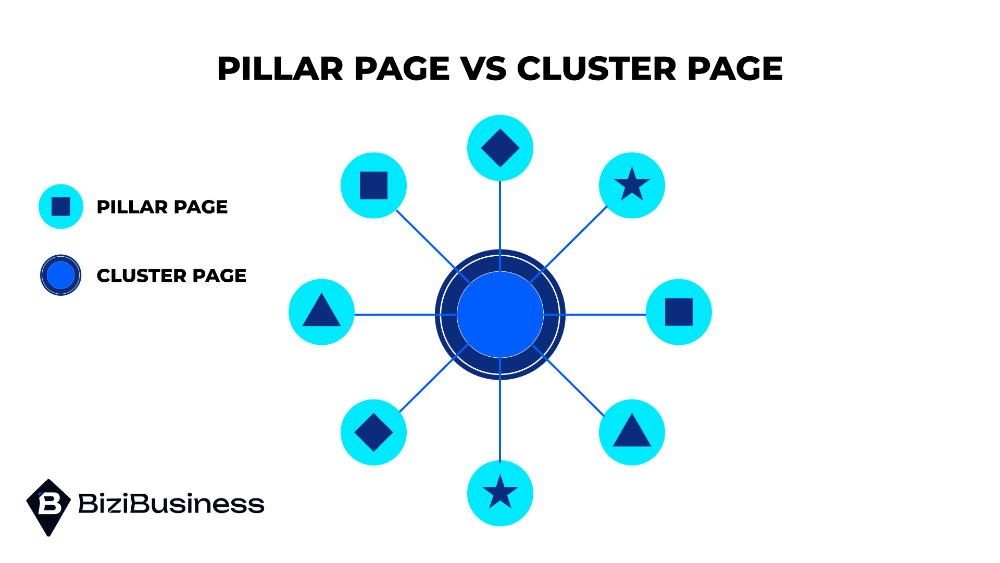
Understanding the difference between a pillar page vs cluster page is key to building a strong SEO content system. Both serve different roles, but they work together to create a structured and search-friendly content experience.
What is a Pillar Page?
- Covers a broad topic from a high-level perspective
- Acts as the main hub for a content cluster
- Contains summaries and links to in-depth cluster pages
- Designed to rank for competitive, high-volume keywords
- Helps define your site’s topical authority
What is a Cluster Page?
- Focuses on a specific subtopic related to the pillar page
- Provides deep, focused information on one keyword
- Internally links back to the pillar page
- Often targets long-tail or question-based keywords
- Supports overall SEO strength by building depth
This structure allows you to satisfy both broad and narrow search intent while keeping your site well-organized. It’s the opposite of unstructured or low-value content. (For contrast, see What Is Thin Content in SEO?)
By linking cluster pages to a strong pillar, you build a network that’s easy for search engines to crawl and users to navigate. That’s exactly what modern SEO demands.
What Makes a Good Pillar Page?
Not every blog post can, or should, become a pillar. So, what makes a good pillar page? It comes down to scope, structure, and connection.
A strong pillar page needs to:
1. Cover a Topic Broad Enough for Expansion
Choose a subject with enough depth to support multiple related subtopics. For example, “Email Marketing” is a strong candidate. Something too narrow, like “Best Subject Lines for June,” is better suited as a cluster page.
2. Link Out to Cluster Pages
The core of SEO topic clusters is internal linking. A good pillar page introduces each subtopic and links out to more detailed articles. It acts as a central guide that keeps users (and search crawlers) moving through your content ecosystem.
3. Use Clear Structure and Layout
Great pillar pages are easy to scan. Use a table of contents, clear section headings, bullet points, and concise summaries to make navigation smooth. Break content into logical sections that each address a specific angle of the topic.
4. Stay Evergreen and Updated
Since pillar pages are foundational, they should be refreshed regularly. They often attract the most backlinks and highest traffic, so they need to reflect your most accurate, current thinking.
If you’re building out SEO topic clusters, your pillar page sets the tone. It introduces the topic, defines its scope, and provides pathways to deeper content, all while showing search engines that your site owns the subject.
How to Create Pillar Content
Building effective pillar content takes planning. It’s not just about writing a long article. The goal is to create a structured, linkable resource that sits at the center of your SEO topic cluster strategy.
Follow these steps to get it right:
1. Choose a Core Topic
Pick a subject broad enough to support 5–10 related subtopics. Think of something central to your niche or business offering. For example: “Content Marketing,” “Email Automation,” or “Local SEO.”
2. Identify Cluster Topics
List out the subtopics that fall under your main theme. These will become your cluster pages. Use search data, customer questions, or insights from a Free SEO Content Audit to help.
3. Build the Pillar Page
Create a long-form post (usually 2,000+ words) that introduces the full topic and links out to each cluster article. Don’t go too deep on each section, save that for the supporting content.
4. Add Internal Links Strategically
Link to each cluster page from the pillar. And make sure each cluster links back to the pillar. This two-way linking helps distribute authority and keep users moving through your content.
5. Optimize for Readability and SEO
Use descriptive H2/H3 headings, add a table of contents, and include keyword-rich meta titles and descriptions. Embed visuals or videos where helpful. You can also address issues like canonical errors to avoid duplicate content conflicts.
Common Mistakes with Pillar Content

Even with the right strategy, many websites fail to get the full benefit of pillar content. Here are the most common mistakes to avoid when building or maintaining a pillar-based SEO structure:
1. Picking Shallow or Too-Narrow Topics
If your chosen topic doesn’t support multiple subtopics, it won’t function as a true pillar. Avoid themes that can be fully covered in a single article.
2. Skipping Canonical Setup
If you have similar content across pages, not setting a canonical URL can cause search engines to treat them as duplicates. This can dilute ranking signals and confuse indexing. (See Duplicate Content SEO Issue for more.)
3. Forgetting to Link Clusters Back to the Pillar
It’s not enough to link from the pillar to the clusters. The clusters need to link back as well. This reinforces the topic relationship and keeps users within your site’s ecosystem.
4. Ignoring Structure and Scannability
If your content is hard to read, search engines may not extract meaning accurately. Use headings, spacing, lists, and bolded terms to guide both readers and crawlers.
5. Creating Duplicate or Thin Variations
Avoid writing multiple weak posts on similar topics. Thin or repetitive content within a cluster can hurt your topical authority and confuse intent signals.
A strong pillar strategy requires more than one good post, it needs intentional structure, quality content, and technical setup. Avoid these pitfalls to get the full SEO value from your effort.
Maintaining and Updating Pillar Pages
Creating a strong pillar page is just the beginning. To keep it ranking and relevant, regular maintenance is essential. As your blog expands and search behavior evolves, your pillar content should grow and adapt alongside it.
1. Refresh Stats and External Links
Outdated data can hurt your credibility. Review stats, quotes, and outbound links regularly. Replace anything that’s expired, broken, or no longer accurate.
2. Add New Clusters Over Time
As you publish more blog posts, identify which ones naturally support your existing pillars. Add internal links from the pillar page to these new clusters, and update the table of contents or summary sections to reflect the additions.
3. Track Engagement with Analytics
Use tools like Google Analytics (GA) and Google Search Console (GSC) to monitor traffic, bounce rate, and dwell time. These metrics show how users interact with your pillar content and where updates may be needed.
4. Schedule Regular Content Reviews
Aim to review and refresh each pillar page every 6 to 12 months. This ensures that your content stays aligned with your evolving SEO strategy, search trends, and business goals.
Keeping your pillar pages fresh helps maintain rankings, improves user experience, and extends the long-term value of your content investment.
Conclusion: Why Pillar Content Still Wins
To recap, what is pillar content in SEO? It’s a strategic, long-form page that anchors a set of related blog posts. Together, this structure signals authority, improves internal linking, and keeps users engaged longer. Search engines reward this kind of organization because it reflects depth, clarity, and expertise.
If you haven’t already, now is the time to identify your first pillar opportunity. Look at your existing blog content. Are there topics you’ve touched on multiple times but never pulled together in a meaningful way? That’s your starting point.
Start by auditing your content. Group related posts. Build a strong pillar that links to each one and brings the full picture into focus. Connect your clusters. Improve the layout. Boost user experience. Pillar content isn’t just a trend. It’s how modern SEO is won.

Subscribe for the week's best marketing content
SEO
Discover the latest SEO tips, techniques,
and trends to boost your website’s ranking and drive organic traffic.

Is more content better for SEO? Learn what Google really values and why content quality, structure, and freshness matter more than volume.
What is pillar content in SEO? Learn how to structure your site using pillar pages...
Learn how is AI Overview affecting SEO for blogging in 2025. Understand the risks, ranking...
Wondering is AI-generated content good for SEO? Discover how AI content impacts your rankings, Google’s...
Write smarter, not harder. Learn how to create SEO content with ChatGPT and boost your...


